
Things to Do in Bismarck in September
September weather, activities, events & insider tips
Low Season · Budget Friendly
September Weather in Bismarck
Long-run averages for September
73°F (23°C)
High Temp
53°F (12°C)
Low Temp
2.1 inches (53 mm)
Rainfall
66%
Humidity
6
Rainy Days
5
Sunny-Day UV
⚠ Early frost hits in late September. It strikes low-lying river areas first. Prairie valleys outside the city feel it too. Camping? Plan early mornings after mid-month with care. Check overnight forecasts. Temperatures plunge below 5°C (41°F) in exposed spots. Pack layers. The cold comes fast.
⚠ Severe thunderstorms still brew in early September. They are less common than in June and July. But the open prairie offers no warning. These storms bring large hail. Dangerous lightning follows. On the river? On a trail? At an outdoor event? Watch the western sky. Towering cumulonimbus means trouble. Move to shelter immediately. Open grassland has no cover. None.
Making the most of September in Bismarck? Browse tours and activities in Bismarck on GetYourGuide.
Is September Right for You?
Weigh the advantages and considerations before booking
Advantages
- + September is the month to be outside in Bismarck. Highs around 23°C (73°F) let you hike, paddle, and wander without July's oppressive heat or the winter that arrives with shocking speed by late October. The Missouri River bluffs south of Mandan turn gold along cottonwood corridors. Late afternoon light across the open prairie takes on a warm amber quality that summer's white glare never manages.
- + The United Tribes International Powwow, typically held the weekend after Labor Day at United Tribes Technical College, is one of the largest powwows in the United States. Dancers and drum groups arrive from across North America. This alone justifies timing a Bismarck trip for early September. The competitive dancing, regalia, and ground-shaking resonance of a dozen drum circles performing simultaneously is unlike anything else on the Great Plains.
- + Crowds, such as they ever exist in Bismarck, thin out noticeably once school resumes. Fort Abraham Lincoln State Park, which can feel busy on July weekends, returns to a quieter rhythm. You might walk the reconstructed On-A-Slant Mandan earthlodge village with only a handful of other visitors. The same goes for trails along the Missouri River corridor.
- + Harvest season fills the Bismarck Farmers Market with squash, late-season sweet corn, and root vegetables. The local dining scene leans into fall menus. September evenings cool into the low 12°C (53°F) range. Sit outside at a downtown patio with a jacket and a locally brewed beer while the last daylight fades over the river valley.
Considerations
- − Daylight shrinks fast. By late September, sunset drops to around 7:15 PM and mornings feel noticeably darker. Front-load your activities if you are planning long days of outdoor exploration. Be realistic about afternoon timing, for anything south of Mandan where the bluffs cast early shadows.
- − North Dakota wind is not a metaphor. September averages are calmer than spring. But gusts of 40 km/h (25 mph) are common enough. A river kayaking trip can go from pleasant to difficult in under an hour. Check forecasts before committing to anything on the water.
- − Bismarck is not a large city, and its entertainment options reflect that honestly. You will likely feel the town's limits within a few days if you need a deep restaurant scene, varied nightlife, or the pace of a bigger metro. This is a destination for people drawn to landscape, history, and quiet. Skip it if you want urban energy.
Settled on September? Compare hotel prices in Bismarck for your dates on Trip.com.
Best Activities in September
Top things to do during your visit
Fort Abraham Lincoln State Park Hiking and Historical Tours
September's comfortable temperatures make Fort Abraham Lincoln the right call for a half-day or full day. The park sits about 11 km (7 miles) south of Mandan along the Missouri. The combination of prairie grassland, river bluffs, and reconstructed historical sites is unlike anything in the eastern half of the country. The On-A-Slant Village, a reconstructed Mandan earthlodge settlement, is worth spending real time inside. The lodges are dim, cool, and smell of packed earth and old wood. In September you can stand inside one without competing with a busload of summer tourists. The Custer House, where George Armstrong Custer lived before the 1876 campaign, is a small but well-maintained officer's quarters that grounds the abstract history in domestic detail. The bluff trails overlooking the Missouri confluence offer views that stretch to the horizon in every direction. By mid-September the cottonwoods below are beginning to shift from green to pale gold. Bring water and a windbreaker. The ridgeline catches every breeze, and what feels like a pleasant 21°C (70°F) in a sheltered valley becomes chilly on exposed ground.
Booking Tip: Guided historical tours of the fort and earthlodge village tend to run on a set schedule. Check seasonal availability as some tours scale back after Labor Day. For current guided options, see the booking section below. Allow at least three to four hours to do the park justice. Plan longer if you intend to hike the full trail system down to the riverbank.
Missouri River Kayaking and Paddling
The Missouri River through Bismarck-Mandan in September is typically at manageable late-summer flows. The water temperature, while cooling, is still tolerable for a capsizing without turning it into an emergency. The stretch between Bismarck and the bluffs south of town moves at a gentle current that suits intermediate paddlers and even cautious beginners on calm days. What makes September the right month is the light and the solitude. The riverbanks are lined with cottonwood, willow, and the occasional bald eagle perched on a snag. By mid-month the leaves have started their shift to gold. You can hear the birds and the water because nobody else is out there. The catch is the wind. North Dakota prairie wind funnels through the river valley and can turn a downstream float into hard work on the return. Morning launches, before the wind typically picks up after noon, are the move. The air smells of damp clay and dried grass. The sandbars that emerge at lower water levels make good rest stops where you can pull the kayak up and eat lunch with your feet in the sand.
Booking Tip: Licensed outfitters in the Bismarck-Mandan area offer kayak and canoe rentals with shuttle service. Book at least a week ahead in September, as some operators begin reducing their fleet after Labor Day. Look for outfitters that provide a weather briefing and wind-speed threshold for cancellations. Check the booking section below for current guided river tours.
Bismarck-Mandan Trail Cycling
Bismarck's paved trail network is one of the city's most underrated assets. The Centennial Trail and the Missouri River corridor trails link parks, riverside stretches, and prairie overlooks across roughly 50 km (31 miles) of connected paths. September hits the sweet spot: warm enough to ride comfortably in a light layer, cool enough that you are not overheating by the second kilometer. The Tom O'Leary Golf Course section cuts through stands of ash and elm beginning to show fall color. The stretch along the river south of Sertoma Park offers views of the water through thinning canopy. The pavement is well maintained and flat to gently rolling. Accessible even if you are not a serious cyclist. Early mornings are best. The prairie dew still on the grass. The air has that sharp, clean bite that only exists between summer and frost. Expect the occasional jogger or dog-walker. Rarely anything approaching congestion.
Booking Tip: Bike rentals are available from local outfitters in the Bismarck-Mandan area. For self-guided rides, the trail system is well-signed and free to access. Guided cycling tours of the area sometimes appear on booking platforms. Check the booking section below for current options. Allow two to four hours depending on your pace and how many stops you make along the river.
North Dakota Heritage Center and State Museum
This is the indoor backup plan that turns out to be one of the best things in Bismarck regardless of weather. Located on the State Capitol grounds, the Heritage Center covers North Dakota's geological and human history from the Cretaceous through the homesteading era. It does this with a seriousness and depth that most state museums in more-visited states do not match. The full-scale Tyrannosaurus rex skeleton is the obvious draw. The Northern Plains tribal history galleries are the real reason to spend time here. The beadwork, the winter counts, and the photographic archives give you context for understanding the landscape you have been driving through. September is a smart month to visit. School groups have not yet reached peak frequency. You can stand in front of the geologic timeline displays without being jostled. The building is modern, well-lit, and climate-controlled. This matters on those September afternoons when a sudden rain squall rolls across the prairie. You will want somewhere to wait it out without feeling like you are wasting time. Budget at least two hours. More if the paleontology wing catches your attention.
Booking Tip: Admission is free. Surprising for a museum of this quality. No advance booking required for general admission. Special exhibitions and guided programs may have separate scheduling. Check the booking section below for any current guided experiences at the Heritage Center or Capitol grounds.
Prairie and Wetland Wildlife Watching
September triggers the fall migration along the Central Flyway. The wetlands and prairie potholes within an hour's drive of Bismarck fill with staging waterfowl. Long Lake National Wildlife Refuge, roughly 40 km (25 miles) southeast of the city, hosts thousands of sandhill cranes in September. Their rattling, prehistoric calls carrying across the flat grassland at dawn recalibrate your sense of scale. The prairie surrounding Bismarck is not dramatic in the mountain-and-ocean sense. It earns its beauty honestly. The grass runs to the horizon in every direction. The sky is absurdly large. In September's slanted light the land turns from summer green to tawny gold in a gradient you can watch change over the course of a week. Bring binoculars and patience. White-tailed deer are common along wooded river corridors. Raptors are active above the stubble fields. If you are lucky and quiet, you may spot a sharp-tailed grouse flushing from a patch of switchgrass. Early morning is essential for birding. The wind that picks up by midday sends most species into cover.
Booking Tip: Wildlife watching around Bismarck is largely self-directed on public lands and national wildlife refuges. Guided birding and nature tours are occasionally available through local naturalist groups. Check the booking section below for current guided wildlife experiences in the area. A spotting scope and a regional bird guide will dramatically improve your experience.
Where to Stay in Bismarck in September
Hand-picked hotels across price tiers for September travellers.

★★★
Budget
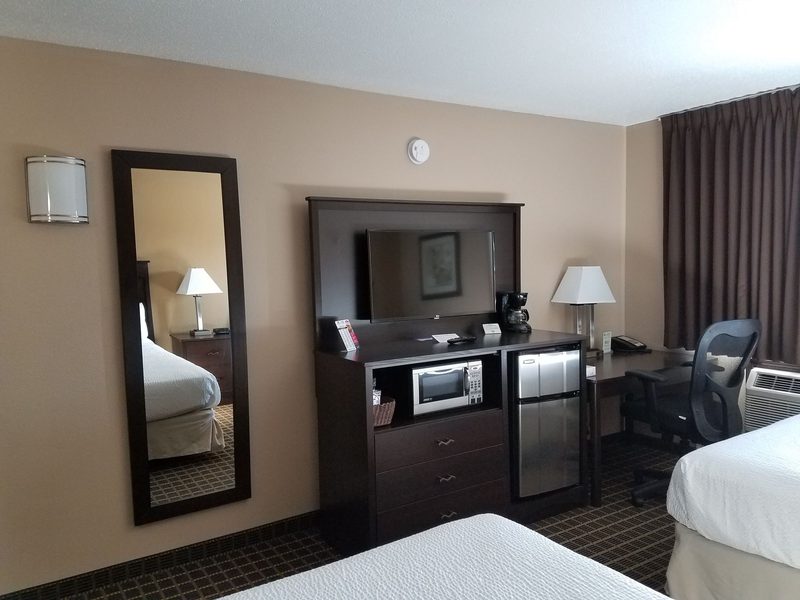
Holiday Inn Express & Suites BISMARCK by IHG
From $259 / night
Check Prices on Trip.com →
Public Holidays in September
Dates that affect opening hours, transport and crowds
Labor Day
Known in English as Labour Day. Observed nationwide as a public holiday.
Labor Day
Known in English as Labour Day. Observed nationwide as a public holiday.
Packing Checklist
Bookmark this page — your progress is saved between visits
Need the full list with shopping links?
Climate-specific gear, brand recommendations, and what to leave at home.
View Bismarck Packing List →Essential Tips
Insider knowledge and common pitfalls to avoid
Insider Knowledge
Cross the Missouri to Mandan and treat the twin city as part of your trip, not a separate destination. Fort Abraham Lincoln is technically in Mandan, the dining options along the main strip add variety, and the drive across the Memorial Bridge at sunset, with the river reflecting the prairie sky below you, is one of the best five minutes you will spend in the area.
The Bismarck Farmers Market runs through September and is where you will find the local produce that defines the season: squash, root vegetables, late sweet corn, and honey from prairie wildflower apiaries. It is small and unpretentious, and going early on a Saturday morning lets you watch the vendors set up and chat without the midday browsing crowd.
The State Capitol building is open to visitors and worth walking through for the art deco architecture alone. The observation deck, when accessible, gives you the highest vantage point in Bismarck, and on a clear September day the view extends across the river valley to the bluffs and the open prairie beyond in a way that no ground-level perspective can replicate. Most visitors skip this entirely in favor of the Heritage Center next door, which means you will likely have the building largely to yourself.
If you are driving anywhere outside the city limits, fill up on fuel before you leave. Distances between towns in central North Dakota are large, cell service drops off within 30 km (19 miles) of the interstate in some directions, and a wrong turn on a county road can add 45 minutes to your drive before you find a place to turn around. The emptiness is beautiful but plan for it.
Avoid These Mistakes
Underestimating the wind. First-time visitors check the temperature forecast and dress for a mild 23°C (73°F) day, then spend the afternoon shivering on an exposed trail because they did not account for sustained prairie wind. Always carry a wind layer even when the thermometer looks comfortable.
Treating Bismarck as a drive-through stop on the way to Theodore Roosevelt National Park. The national park is roughly 4.5 hours west and makes a poor day trip. If your plan is to visit both, allocate separate days and consider overnighting in Medora or Dickinson rather than trying to round-trip from Bismarck.
Assuming everything runs on a big-city schedule. Bismarck's restaurants and attractions keep hours that reflect a small capital city, not a tourist destination. Kitchens close earlier than you expect, some attractions reduce hours or close certain days after Labor Day, and showing up at a trailhead at 4 PM in late September leaves you with limited daylight. Plan your days with an early start and front-load the outdoor activities.
Short on time? See day trips around Bismarck on GetYourGuide.
Ready to plan your trip to Bismarck?
Now that you've got the research covered, here's where to go next.
Explore More Activities in Bismarck
Didn't see anything interesting yet?
Browse Viator's full catalog of tours, day trips, food experiences, and private guides in Bismarck.
See All Bismarck Tours on Viator